


Joe listens to a Tern & AI podcast every night.
He built it himself. He uses Claude to pull relevant articles, AI news, and product updates, feeds them into Google's NotebookLM, and generates an audio summary he listens to on his own time. Nobody asked him to do that. It's not in his job description. He just decided he wanted to understand the product deeply and figured out how to make it happen.
Nonah is currently doing 3 jobs. She EAs for 2 founders. When our Head of Events went on maternity leave, Nonah stepped in to cover. The only thing making that possible is that she's built her own AI systems to automate what used to take a full role's worth of time. She didn't wait for a playbook. She wrote one.
Joe and Nonah are on our Philippines team.
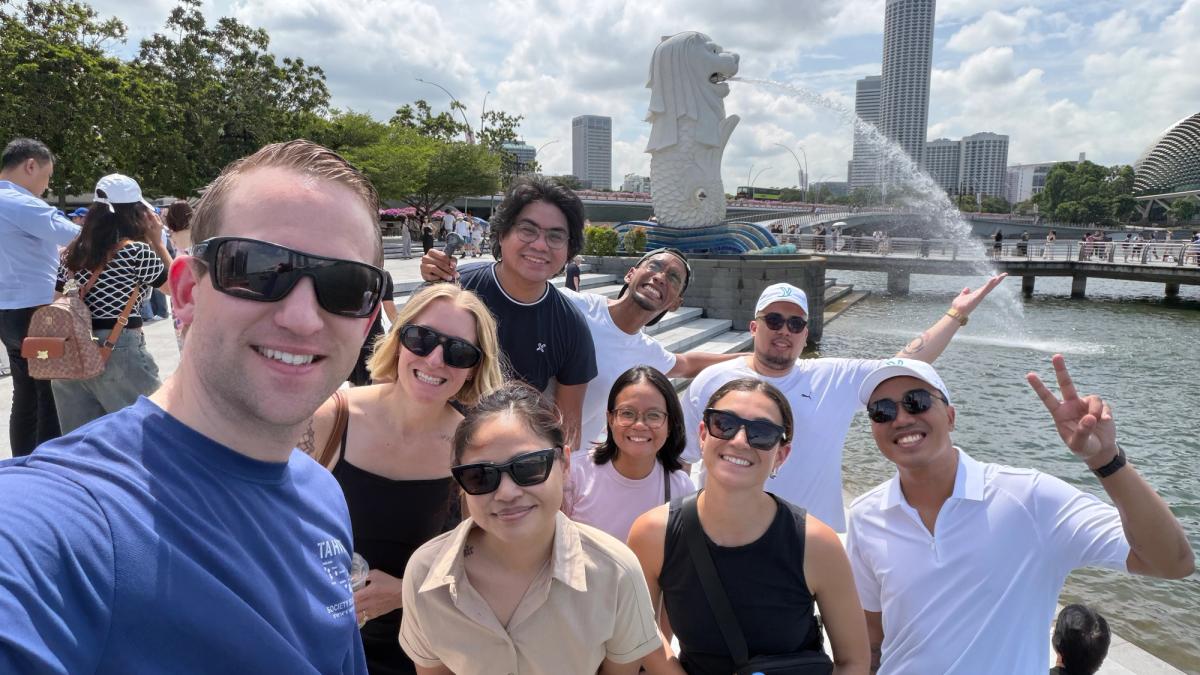
Last week I flew to Singapore with Abby, our Head of Customer Experience, and Ellen, one of our earliest support hires, to meet them and the rest of our APAC team for Tern's first APAC retreat. I came back more bullish on this team than I've ever been.
That's probably not what you picture when you think about offshore support.
How we actually got here
We didn't start out with a philosophy. We started out trying to save money.
Like a lot of companies, our first move was a BPO firm. We found one through a podcast ad, it placed a couple of executive assistants, and it seemed fine. What we didn't understand was the economics. A good BPO passes along maybe 30% of what you pay to the actual person. The other 70% goes to the firm. That ratio shapes everything. The firm's incentive is to fill seats. The candidate's incentive is to keep the job by not causing problems. Nobody is optimizing for exceptional. And the best people in the Philippines know this. They go direct because the pay is dramatically better. The BPO model doesn't just produce worse outcomes. It actively self-selects away from the best talent.
Eventually we cut out the middleman. We started posting jobs directly through Remote.com and running the same interview process we use for every role. Same job descriptions. Same panel interviews. Same questions. More money reaches the person. Better candidates apply. Better people get hired.
That shift sounds simple. But it changed everything about what we were selecting for.
The mentality we were hiring against
Here's the thing about the Philippines talent market. A lot of these people have been told their entire careers to execute and stay quiet. Don't ask questions. Don't offer ideas. Show up, do the task, go home.
One of our team members shared during the retreat that he'd been fired from a previous job for asking his manager what great looks like. The manager's response was: "If you have to ask, you don't know, and you shouldn't work here." He got fired for asking that question. He wasn't complaining when he told us. He was just sharing his story.
That's the environment a lot of these people have come from. And here's the problem for companies that built on that model: when an AI tool comes along that can do a robotic task cheaper, they have nothing left. They optimized for compliance. That's all they got.
Why we went to Singapore
We've done a US team retreat every year for 4 years. It's one of the highest-return things we do as a remote company.
Remote work makes real connection harder than most people admit. When you only ever interact with someone on Zoom or Slack, you see them in the middle of a back-to-back eight-hour day. You don't know them. You don't know that they're also someone you can grab for a quick brainstorm, that there's a person behind the Slack handle who has ideas and a sense of humor and cares about the work. That distance makes it hard to assume good intent. Small things feel bigger than they are.
We saw this firsthand a few months ago when we shifted our Philippines team to a follow-the-sun schedule. Instead of working nights to align with US hours, they now come online at 4 PM Eastern. For us it was a straightforward call: better coverage, better hours for the team, more sustainable. But the initial reaction from some team members was that it was a precursor to shutting the Philippines operation down entirely. They'd seen it happen at another company. First you disconnect the team from US hours. Then you wind it down.
That's not paranoia. That's pattern recognition from people who have been given every reason to expect the worst.
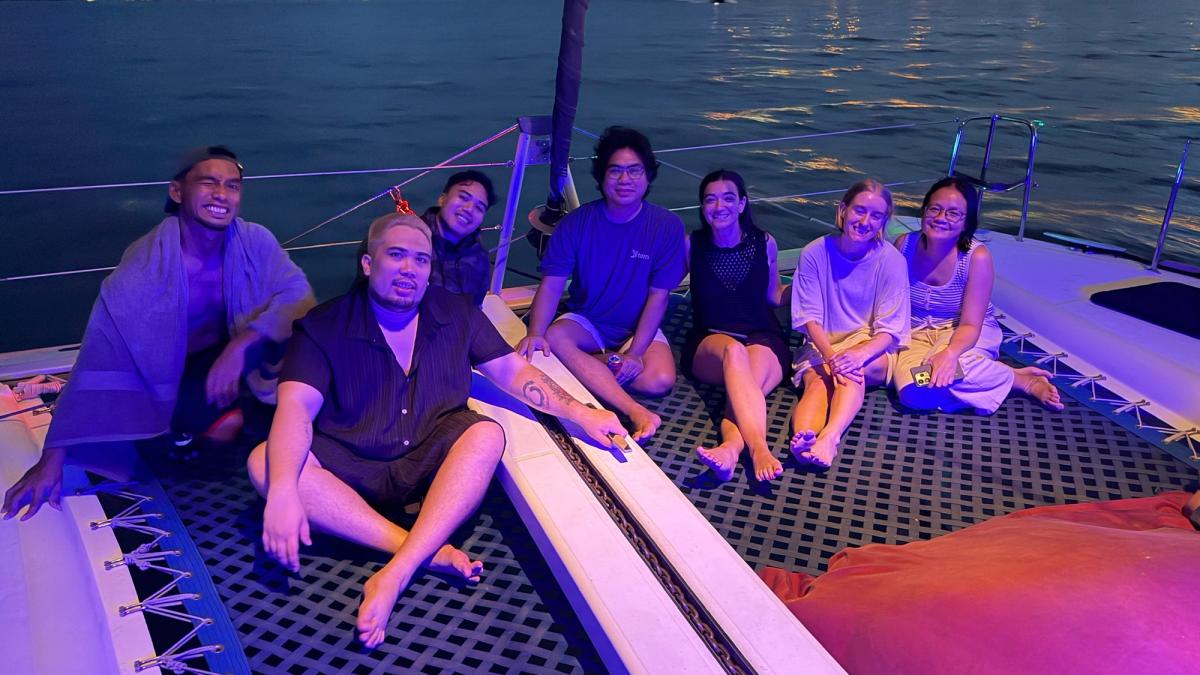
So when I say the retreat mattered, I mean it in a specific way. We rented a catamaran and went out in the bay. We did an Enneagram exercise in the pool. We had long dinners. We walked around Singapore at night. Those things sound like nice perks. They're actually the work. You can't build trust over Zoom with a team that has spent their entire career being told they're replaceable. You have to show up.
The walls didn't come down on day one. But by the last session ideas were flying. "What if we did this? What if we did this?"
I think the ROI on this retreat is going to be higher than any US retreat we've done. Because the gap between what these people expected and what they experienced was so much wider. When you've been fired for asking what great looks like, it takes more than a meeting invite to believe you're actually allowed to have an opinion.
Seeing it in person, in real time, was one of the coolest things I've experienced building this company.
What happens when you give people the context to be great
On the last day, I walked the team through how our AI agent actually works. How the tool calling performs. What it looks like when it reaches for a help article. How our approach compares to something like Fin. I wanted them to understand the system they helped build, not just operate it.
The room changed. People who had been quiet started talking over each other. It turned out several of them were already doing things with AI that I didn't even know about. Automating parts of our knowledge base. Finding documentation gaps. Building small systems on their own time to make the work better. They just hadn't felt like it was their place to bring it up.
That's the real cost of the old model. Not just the tasks that don't get done. The ideas that never get shared.
Our Philippines team now leads our Fin AI training. They've built the knowledge base, the content library, the conversation flows that power our AI agent. They're not maintaining a system someone else designed. They're building one. Our response times have gone from hours to minutes. Our CSAT is the best it's ever been.
None of that came from finding some hidden talent pool. It came from stopping the practice of hiring people and then designing systems that make them small.
The bigger point
There's a lot of noise right now about what AI means for economies like the Philippines. The narrative is mostly about displacement. Offshore labor built on repetitive tasks is exposed. That's probably true for companies that hired robots.
We're seeing something different. The companies that win are the ones that hired great people, gave them context and ownership, and then watched AI amplify what those people were already capable of. Joe isn't threatened by AI. He's using it to build his own learning system. Nonah isn't threatened by AI. She's using it to do the work of 3 people.
Great talent doesn't have a geography. It has an expectation.
Hire great people wherever they are. Run the same process. Pay them fairly. Show up for them the same way you show up for everyone else on the team. Then get out of the way.
And to our Philippines team, Yohan, Ken, April, Joe, Angie, and Nonah: thank you for believing in us. You are the start of something truly incredible in this region, and we are just getting started.