
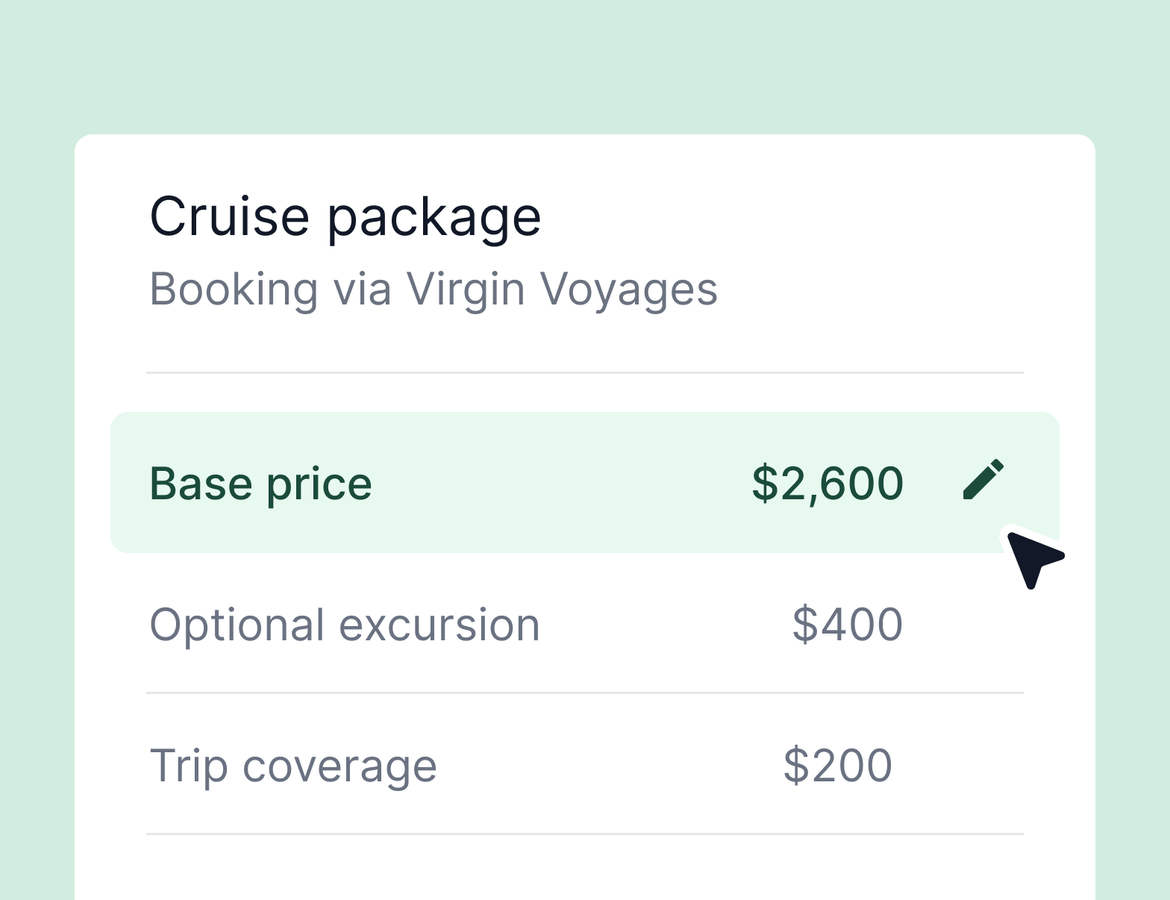
We're getting close to shipping itemized package pricing to all Tern users. Before we do, we wanted to take a moment to clarify how packages are meant to be used — because this is one of the features we see misunderstood most often, and getting it wrong has real consequences for your business.
What a package actually is
In Tern, a package represents a set of line items that are processed as a single purchase from a single supplier. Think of a cruise that includes a shore excursion and supplier trip protection — technically separate add-ons, but all charged together in one transaction. Or a resort that bundles a room, transfers, and daily excursions under one price. Everything goes on the card in a single swipe.
The traveler sees one price. You track the individual components behind it, for your own records, for refund management, and for accurate authorization.
That's what packages are built for.
What packages are not for (for most advisors)
Some advisors try to use packages to bundle purchases across multiple different suppliers into a single price, with the goal of presenting it all as one "trip price." For example, combining a hotel booked through Supplier A, a tour booked through Supplier B, and airfare booked through Supplier C.
For many advisors, this creates a serious problem: your clients don’t see the actual cost of these items until it hits their credit card statement, leading to a higher risk of chargebacks, with no papertrail to defend them.
When a client disputes a charge with their credit card company, the burden of proof is on you. You need to show that the client specifically authorized that charge, for that supplier, for that amount.
If a client authorized a single "trip price" but you charged their card with three different suppliers, you don't have clean authorization for any one of those individual charges. The supplier can't defend the chargeback without it. And if the supplier can't defend it, you're likely on the hook for the disputed amount.
For a deeper look at how chargebacks work and why proper authorization is the most important protection you have, read our full guide: Taking credit cards, fighting chargebacks, and PCI compliance: what to know as a travel advisor.
The exception: if you're operating as a merchant
The calculus changes significantly if you're operating as a merchant and collecting payment directly from clients yourself, then paying suppliers out of your own business account.
In this model, you're the merchant. The client pays you, not the supplier. You then handle each supplier payment on the back end. Because the client's authorization is with you for the total trip cost, you can legitimately bundle components from multiple suppliers under a single price, since there's only one payment relationship to defend.
This is essentially how tour operators work. If you're structured and licensed this way, using a package to group cross-supplier components and present a single price is a valid approach.
If you're not sure whether your business is set up this way, talk to a travel attorney. The distinction matters a lot, and the wrong assumption is expensive.
Itemized package pricing is not currently optimized for this use-case - although it should help get you closer to what you need. We plan to better support these types of workflows for tour operators in the future.
The misconception around pricing visibility
One reason advisors want to bundle across suppliers is that they don't want clients to see itemized costs. That's a reasonable instinct. Showing a client that their hotel costs $4,200 and their tour costs $1,800 can invite the kind of comparison shopping that undercuts the value of what you do.
You can reduce that risk without changing how your bookings are structured. In your trip settings, the Pricing visibility option lets you hide individual activity and package costs on the itinerary, so clients browse the trip without fixating on line items.
When they're ready to book, they'll see the breakdown on the authorization page before confirming. That's actually a good thing — it means no surprises when the charges hit their credit card statement, and you have clean, itemized authorization for every supplier. Everything is tracked on the back end throughout.
Itemized package pricing is a separate tool for a different purpose — tracking individual costs within a single supplier's package, like a tour operator who includes accommodation, transfers, and excursions under one price. It is not a workaround for combining bookings from multiple suppliers into a single authorization. That distinction matters a lot when a chargeback lands.
The legitimate use cases for packages
Packages in Tern are the right tool when:
- You're booking a product from a single supplier that includes multiple components (tour, resort, cruise, etc.)
- You need to track individual costs within that product for refund purposes
- You have optional add-ons, room-type selections, or option block selections that affect the final price
- You're a licensed seller of travel collecting client funds directly and paying suppliers yourself (although it’s not well optimized for this, yet).
If you're using a client's credit card to pay suppliers individually, each supplier booking needs its own authorization, regardless of how you present the pricing to the client.