

Every travel advisor knows what it means when a client arrives at a hotel and the general manager comes out to greet them by name. That moment doesn't happen by accident. It happens because the advisor built a relationship with that GM. Maybe it started as a 7-minute appointment at a trade conference, an exchange of business cards, an email that said "let me know how I can help." That's enough. The relationship is how the upgrade happens, how the amenity appears, how the client feels important in a way they remember for years.
Travel people understand this instinctively. Tech people, and venture capitalists especially, tend not to. Relationship currency doesn't show up cleanly in a spreadsheet, so it gets discounted.
We've come to believe the same logic applies inside a company. The trust between teammates is the same kind of currency. It's what determines whether someone runs toward a hard problem with you or waits to see how it resolves. It's what determines whether, when something fails, the room fills with people protecting their own standing or people saying "here's where I fell short, help me get better." That kind of honesty doesn't happen because you asked for it. It happens because people have built enough trust to know it's safe. And that pattern recognition, that learned sense that vulnerability is met with support rather than judgment, is what separates teams that improve from teams that just survive.
At Tern, every Friday, we get the whole team together for Coffee and Conversations. It's a structured, intentional investment of time to help us operate at the highest level as a remote company by building real relationships across the team.
Here's how it came together, and why it matters.
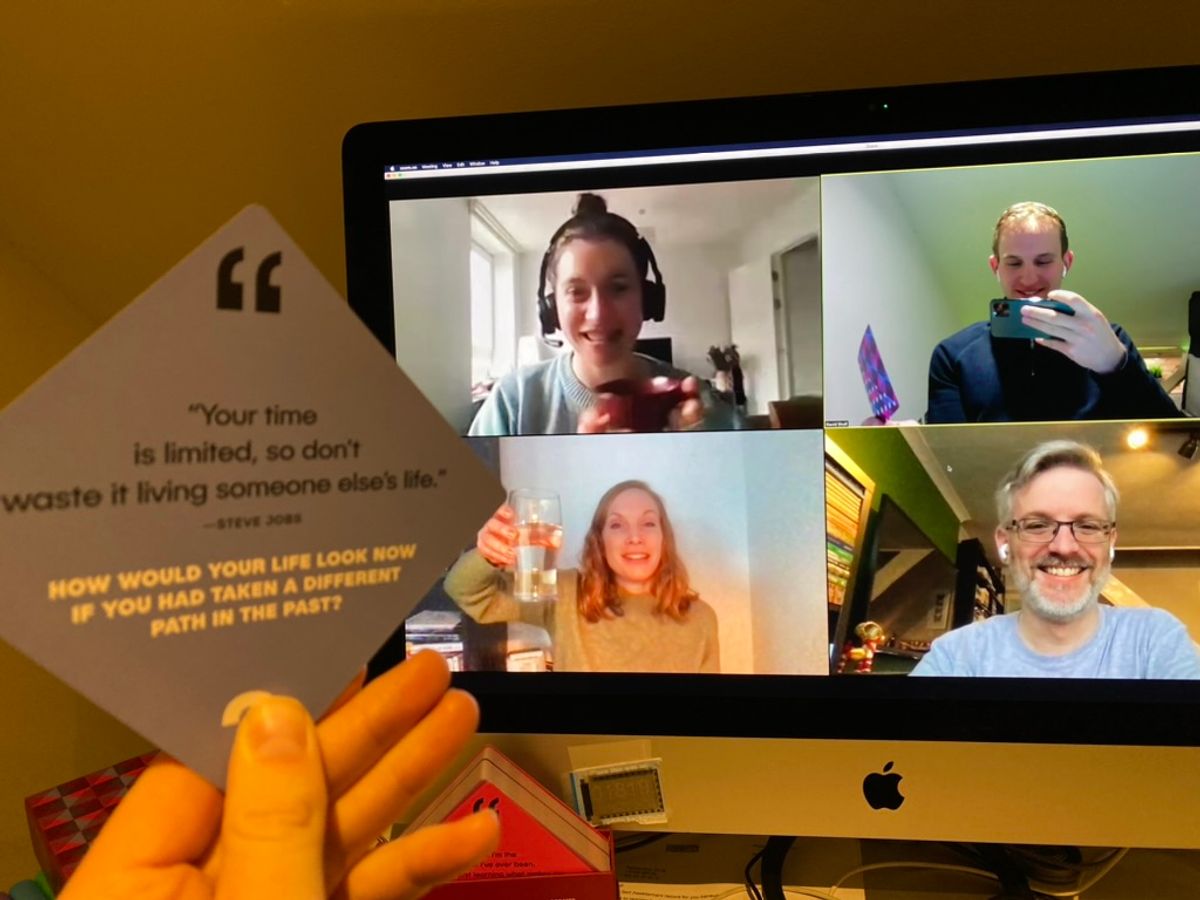
In 2020, I was leading a team in the UK when the world shut down. The hardest problem wasn't the work. The work continued. The hard problem was connection, the slow erosion of the sense that you were doing something alongside actual humans.
I tried the obvious things. Virtual happy hours. Casual Zoom calls. The problem wasn't participation. It was that without structure, the conversations just looped. Did you wash your groceries this week? What cocktails have you figured out? Same topics, every week, until everyone quietly stopped showing up. Unstructured time in a crisis defaults to talking about the crisis.
So I started experimenting with question cards, the kind you've seen at dinner tables. Structure changed the dynamic immediately. Over the following months I kept iterating: what if we added a slide? What if people had a full week to think about their answer? What if a wheel picked next week's topic so nobody had to volunteer?
By the time I co-founded Tern, the format had a shape. We were remote from day one, and Coffee and Conversations was in the calendar from the start. Every Friday. Every person. No exceptions.
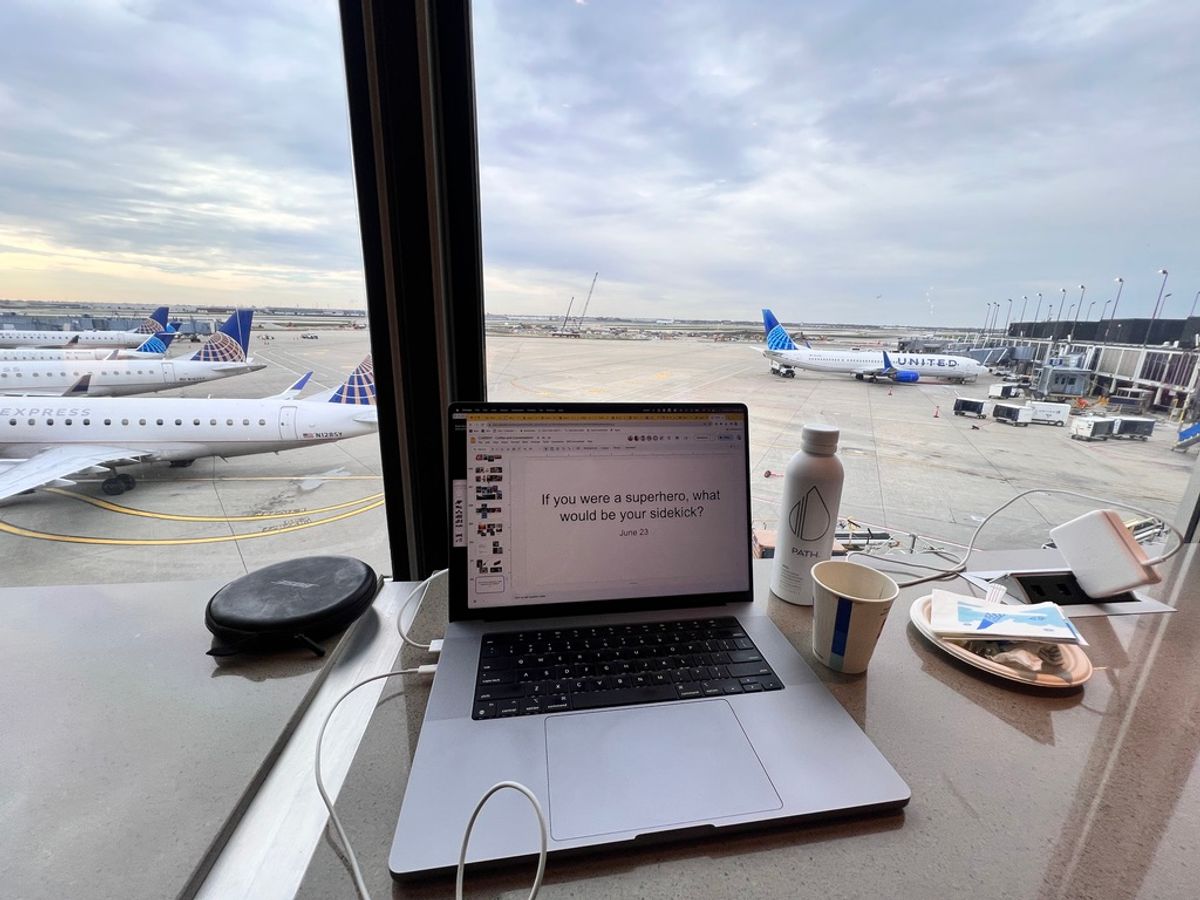
Here's the argument for why this matters operationally.
Remote teams have a default shape. It looks like: 3 minutes of small talk, 57 minutes of work, repeat until everyone knows each other's function but not each other. Multiply that across a year and the people you work with become colleagues in only the narrowest sense. You know their Slack handle. You don't know that they have a strong take on house design, or that they grew up in a town you've been through, or that they're obsessed with a band you've never heard of.
That sounds like a soft loss. It isn't.
When you stop knowing people as humans, you start reading their messages less charitably. The rushed Slack reply becomes dismissive. The late deliverable becomes a character judgment. And the moment a team starts assuming bad intent, something important dies. People stop running toward problems together and start protecting themselves from each other.
That spiral is expensive. It is much easier to prevent than to undo.
Coffee and Conversations is how we prevent it. The design is intentional: everyone adds a slide, everyone shares, the wheel picks the topic so nobody has to perform spontaneity. The question can be anything. What are you listening to lately? What's the best trip you've ever taken? What would you build if money weren't the constraint? The content matters less than the accumulated weight of 40 weeks of Friday mornings where you learned something real about the person on the other side of the screen.
Building a technology company in travel is hard. Building it remote made it harder. Building it remote-first, with a distributed team, while trying to move fast on a complex product in a complex industry: that combination requires a level of trust that doesn't happen by accident.
40 minutes on a Friday morning is one of the highest-leverage hours on our calendar. The people who are tempted to skip it because they have "real work" to do are exactly right about the urgency. They just have the math backwards.
The output of a remote company is bottlenecked by how much its people trust each other. Trust is not produced by status updates. It is produced by knowing each other as humans.
Coffee and Conversations is how we do that on purpose.
How to run Coffee and Conversations on your team
If you want to implement this, the setup is simple. The discipline is showing up every week.
1. Pick a recurring time and protect it. We do Fridays. The specific day matters less than the consistency. Put it on the calendar as a standing meeting and treat it like any other operational commitment. It only works if it doesn't get bumped.
2. Set up the wheel. We use Wheel of Names. Add every person on the team. At the end of each session, spin the wheel to pick who chooses next week's question. That person has the full week to think about it and add it to the deck before Friday.
3. Give everyone a slide. One slide per person. Everyone adds their answer before the call. No performing spontaneity, no putting people on the spot. The slide is the permission structure that gets quieter people into the conversation.
4. Break into small rooms. We use breakout rooms so the groups stay small enough that everyone actually talks. 4 to 6 people per room is about right. Big enough to be interesting, small enough that nobody hides.
5. Start with a question, not a blank page. The question can be anything, but it should be personal rather than professional. The goal is to learn something about the person that you wouldn't learn in a status meeting. We've built up a library of questions over the years. You can find a sample set here.
6. Use our slide template. We've made our template available so you don't have to start from scratch. Download it here (yes it’s very simple)
The whole thing runs about 40-60 minutes. The investment is small. The return, over time, is not.
If you try it, let us know how it goes.